
Fitting a Real Workout Into a Busy Day: A Practical Guide
A step-by-step way to choose and fit a 15 to 45 minute session into a working day, whether you train at home, in a gym or outdoors.
6 minutes to read
Start with the time you actually have
Most people plan workouts for the day they wish they had, not the day in front of them. A calendar full of meetings, a long commute through Mysuru traffic and a family dinner leave less room than an hour at the gym demands. The first step is to look at tomorrow honestly and find the real gaps, even if the biggest one is only fifteen minutes.
Write down three windows from your usual week: before work, a break in the middle of the day, and the evening after you reach home. Mark how long each one really lasts once you subtract travel, changing and a shower. You will often find that a 20 minute window is more dependable than a 60 minute one that gets cancelled whenever something comes up.
A short session that happens beats a long one that stays in your head. Short sessions of 15 to 45 minutes are built for exactly this, so match the length of the workout to the window you found rather than stretching the window to fit the workout.
- Check tomorrow's calendar the night before
- Count travel and changing time inside the window
- Pick the window you can protect most often
Match the session length to your energy
Time is only half the picture. A 45 minute session after a tiring day can feel like punishment, while a 15 minute one at the same hour might be easy to finish. Think about how you usually feel at each window: sharp in the morning, flat after lunch, or restless in the evening.
As a rough guide, use the 15 minute slots for light, steady work such as a brisk walk-run or a bodyweight circuit. Keep 25 to 30 minutes for sessions with a little more effort, and save the full 45 minutes for days when you have both time and energy. This keeps hard days hard and easy days easy.
Resist the urge to turn every short session into an all-out effort. If you push to exhaustion in 15 minutes, you may skip the next one. A gentle session that leaves you feeling fine is the one you will repeat on Thursday, and repeating is what builds fitness over a few weeks.
Choose a place: home, gym or outdoors
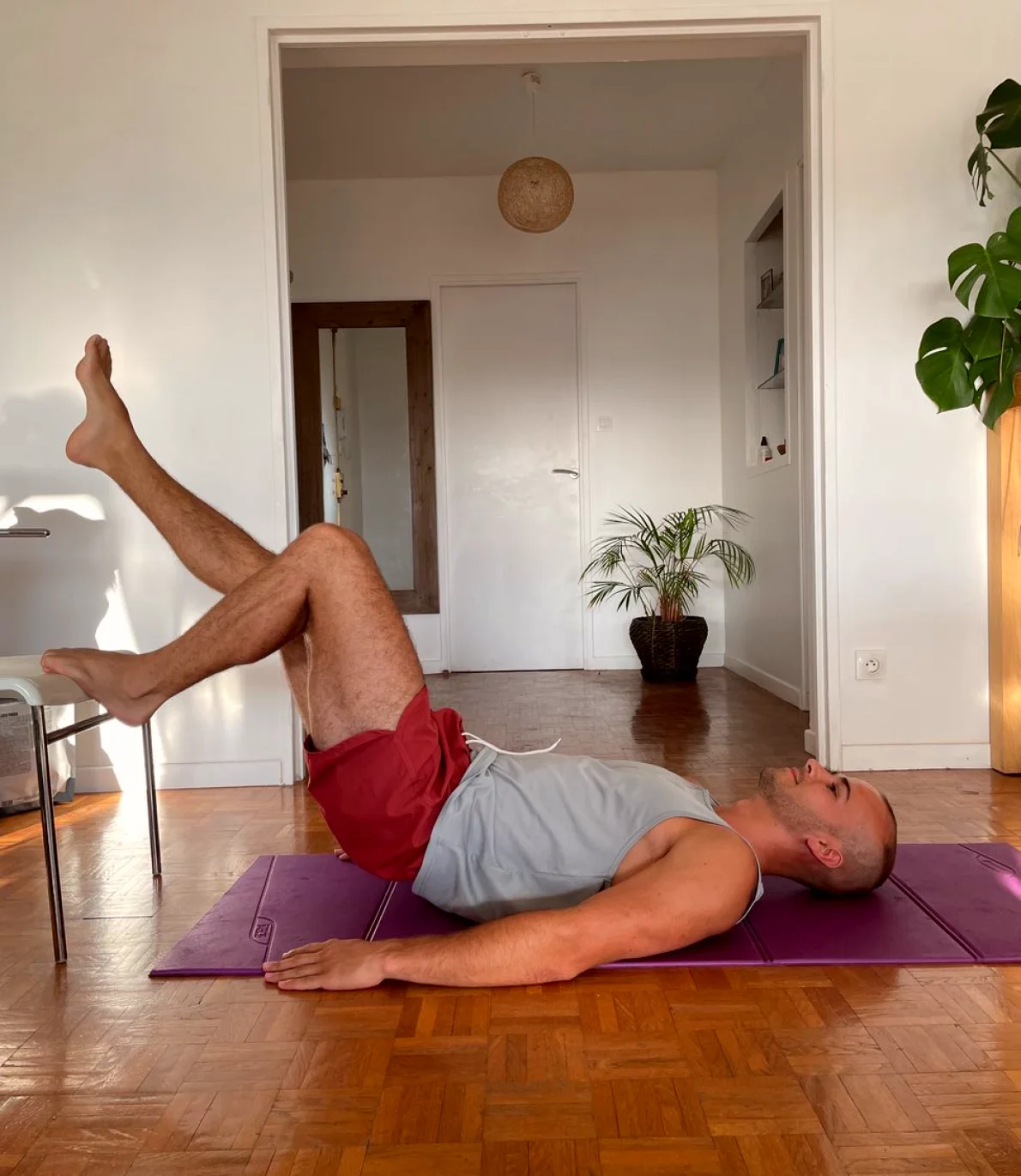
Where you train changes what is realistic. At home you need only a mat's worth of floor and a few minutes, which removes the travel entirely. Squats, lunges, push-ups, planks and step-ups need no equipment and fit in a small apartment without disturbing anyone.
A gym makes sense when you want weights, and a 30 minute session of two or three lifts can be enough if you plan it before you arrive. Walk in knowing the exercises, sets and order, so you are not wandering between machines while the clock runs down.
Outdoors suits runs and rides, and in these cooler weeks the early morning and evening hours are pleasant in most Indian cities. A park loop or a quiet road near home turns a short window into a proper session. Keep a second option for rainy days, so the weather never becomes the reason you skip.
- Home: no kit, no travel, easiest to repeat
- Gym: best for weights if you plan the session first
- Outdoors: good for runs and rides, keep a wet-day backup
Build a simple 20 minute session
A short workout works best with a clear shape. Spend the first three minutes warming up with marching on the spot, arm circles and easy hip movements. Then work for about fourteen minutes, and finish with three minutes of gentle stretching while your breathing settles.
For the main block, pick four movements: a squat, a push-up, a lunge and a plank. Do each for 40 seconds, rest 20 seconds, and go around the circuit twice. If a movement is too hard, change it rather than skip it: push-ups against a wall or a table, squats to a chair, a shorter plank.
Counting rounds instead of watching the clock helps too. Once two rounds feel comfortable, add a third the following week, or lengthen the work period to 45 seconds. Small steps like these keep the session fresh without making it feel like a different, harder workout.
- 3 minutes warm-up
- Squat, push-up, lunge, plank for 40 seconds each
- Two rounds, then 3 minutes stretching
Keep a record so you can see the pattern
A short session is easy to forget the moment it ends, which makes it hard to feel that anything is changing. Take ten seconds afterwards to note what you did, how long it took and how you felt. A line in your phone is plenty, and a fitness app can hold the same details for you.
After two or three weeks, look back over the entries. You will probably see that mornings were more reliable than evenings, or that Wednesdays always fall apart. That is useful, because it tells you where to move a session rather than telling you to try harder.
Recording also gives you something honest to compare against. If a 20 minute circuit felt tough two weeks ago and feels manageable now, you have seen progress without needing a scale or a mirror. Seeing that pattern is often the thing that keeps people going when motivation dips.
When the day falls apart anyway
Some days will not cooperate: a late meeting, a missed bus, a poor night's sleep. Decide in advance what your smallest acceptable workout is, perhaps ten minutes of squats, push-ups and a walk around the block. On those days, do that and call it done.
This matters more than it sounds. The goal is to avoid the all-or-nothing trap, where one missed plan turns into a missed week. A ten minute session keeps the routine alive and costs you almost nothing.
Be kind about the gaps too. If you miss a day, pick up with the next planned window and carry on. Nobody builds fitness through a perfect streak, and a steady habit of mostly showing up will take you further than a perfect fortnight followed by a long break.
- Define your minimum session ahead of time
- Restart at the next window, without making up for lost days
Workouts that fit your day start with an honest look at your time, not with a bigger plan. Find a window you can protect, match the session to your energy, pick a place that removes friction and keep a short record. Fifteen to 45 minutes, repeated through the week, adds up. Begin with one 20 minute session in the next couple of days and see how it feels.
Rohan Hegde
Lead Mobile EngineerRohan builds the Android experience and keeps run tracking steady on everyday phones. He cycles to work along the Mysuru palace roads.
Send us a message
- Phone
- 0821 4067 318
- [email protected]